Shell & Tube Heat Exchanger Manufacturers in Pakistan
Shell and tube heat exchangers are among the most widely used industrial heat-transfer equipment.
Their robust construction, flexible design and ability to handle demanding operating conditions make them suitable for many industrial applications.
How Does a Shell & Tube Heat Exchanger Work?
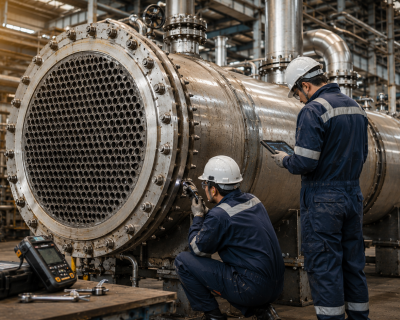
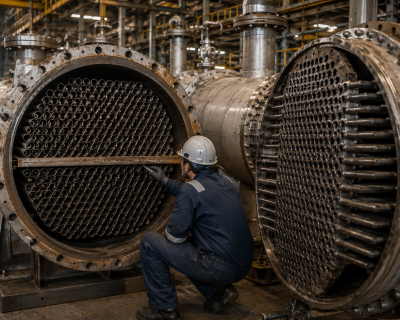
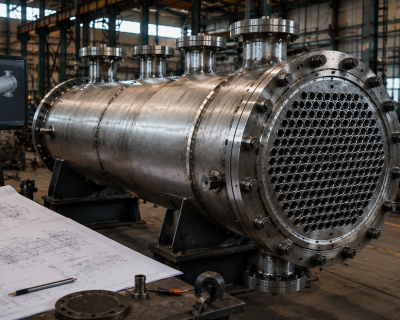
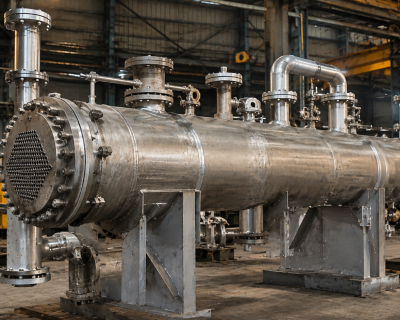
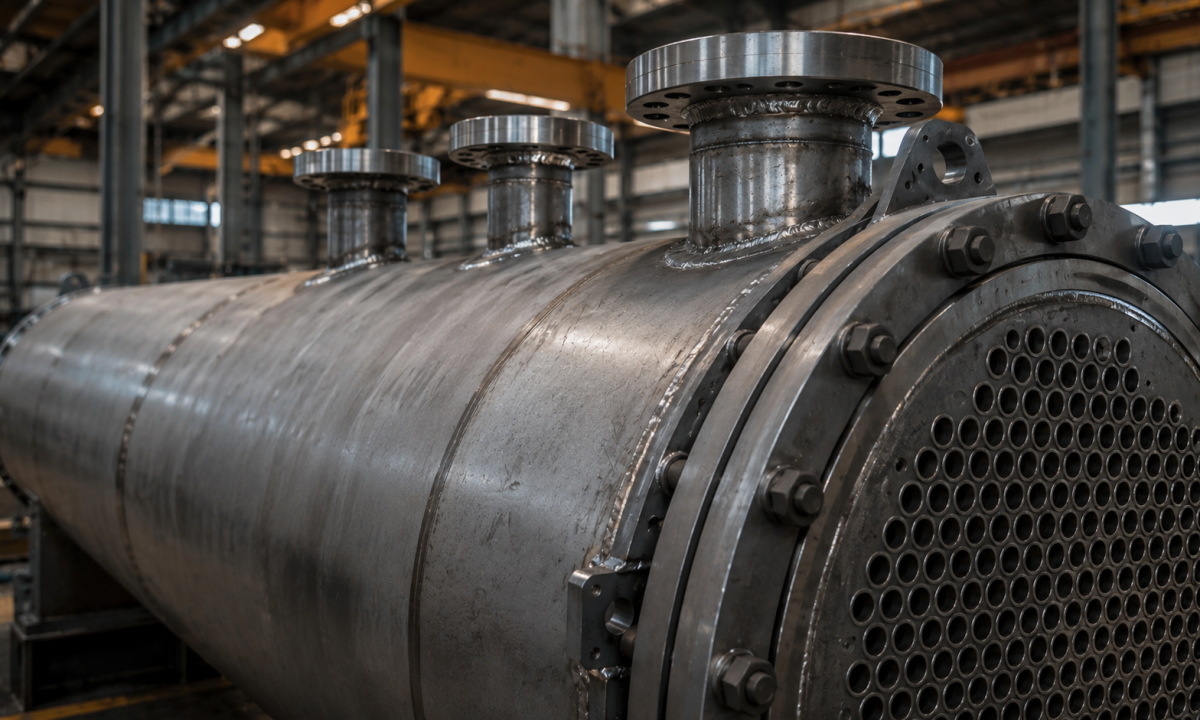
A shell and tube heat exchanger contains a bundle of tubes installed inside a larger shell.
One fluid flows through the tubes while another fluid flows around the tubes on the shell side.
Heat transfers through the tube walls while the fluids remain separated.
Main Components
Typical components include:
- Shell
- Tube bundle
- Tube sheets
- Baffles
- Channel/head
- Nozzles
- Supports
- Gaskets
- Expansion components where required
Applications
Shell and tube heat exchangers can be used for:
- Oil cooling
- Water cooling
- Process heating
- Process cooling
- Steam applications
- Engine cooling
- Compressor systems
- Industrial thermal processes
- Heat recovery
What Makes a Good Shell & Tube Heat Exchanger?
Important factors include:
Correct thermal design
The exchanger must provide the required heat-transfer capacity.
Appropriate materials
Materials should match the operating environment.
Controlled pressure drop
Pressure loss should remain within the application’s acceptable limits.
Proper mechanical design
The equipment needs to accommodate operating pressure, temperature and thermal expansion.
Quality fabrication
Fabrication quality affects reliability and service life.
Custom Shell & Tube Heat Exchangers
Industrial applications often have different operating requirements.
Maxim Thermal Engineering can provide custom engineering and fabrication solutions based on application requirements.